20 LPA In Hand Salary: Tax, PF and Deductions Explained
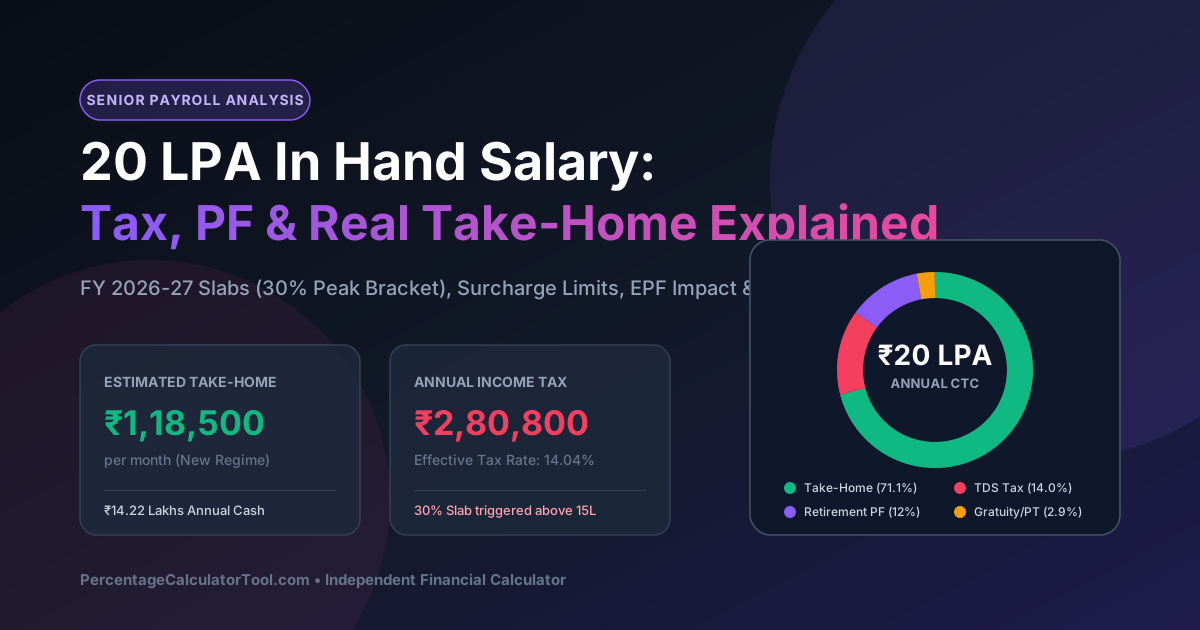
Reaching an annual compensation of ₹20,00,000 (20 LPA) is a career milestone that places an Indian professional among the country's top income earners. But crossing the ₹15 Lakh boundary triggers the peak 30% tax bracket under the New Tax Regime. While a simple calculation suggests ₹1,66,666 each month, the actual amount credited to your bank account settles between ₹1,23,600 and ₹1,30,500 per month. Here is the full financial anatomy of an executive package.
1. The 20 LPA Landscape: From CTC to Net Bank Credit
When you receive an offer of ₹20,00,000 per annum, the raw monthly division suggests an extraordinary inflow: ₹20,00,000 / 12 = ₹1,66,666 per month. It is natural to expect a bank deposit close to ₹1.5 Lakhs every single month.
However, at 20 LPA, your compensation triggers two heavy structural drains. First, company retirement retainers and statutory reserves hold back approximately ₹14,000 every month. Second, your income pushes through all intermediate tax brackets and crosses into the 30% marginal income tax bracket.
With monthly TDS withholdings approaching ₹18,800 and your own employee EPF taking ₹10,000, your actual credited take-home lands at ₹1,23,645 per month under typical corporate terms (or ₹1,30,500 if your firm supports statutory EPF capping).
2. Standard Salary Structure for an ₹20,00,000 CTC
In executive and senior engineering compensation, Indian payroll departments typically structure packages with a 50% basic pay ratio to ensure compliance with labour codes and statutory retirement mandates:
| Component | Computation Percentage | Monthly (₹) | Annual (₹) |
|---|---|---|---|
| Basic Salary | 50% of CTC | ₹83,333 | ₹10,00,000 |
| House Rent Allowance (HRA) | 40% of Basic | ₹33,333 | ₹4,00,000 |
| Special Allowance / Executive Pay | Balancing Component | ₹35,992 | ₹4,31,900 |
| Gross Monthly Earnings | Basic + HRA + Special Allowance | ₹1,52,658 | ₹18,31,900 |
| Employer EPF Share | 12% of Basic | ₹10,000 | ₹1,20,000 |
| Gratuity Accrual Reserve | ~4.81% of Basic | ₹4,008 | ₹48,100 |
| Total Cost to Company (CTC) | Gross Pay + Retainers | ₹1,66,666 | ₹20,00,000 |
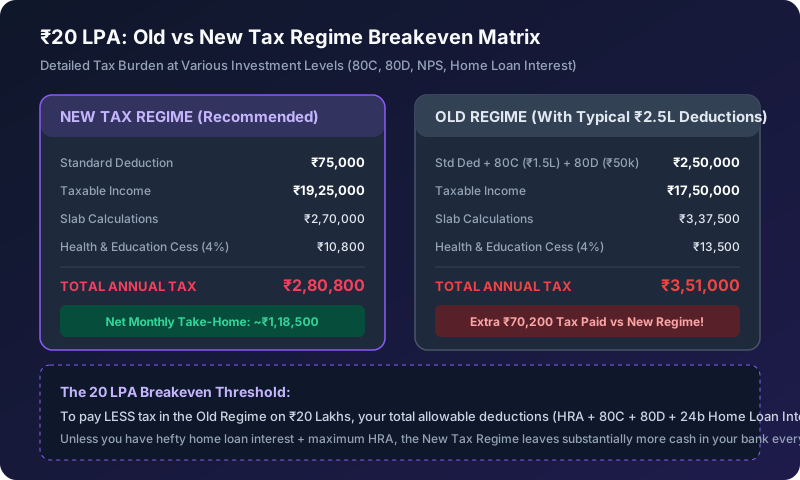
Figure 1: Breakeven analysis showing why the New Tax Regime saves ₹70,200 annually over typical Old Regime deductions.
3. Stepping Into the 30% Tax Slab: Detailed Math
Under the FY 2026-27 New Tax Regime, any income beyond ₹15,00,000 is taxed at the highest bracket of 30%. Let us compute how your ₹18,31,900 gross earnings translate into net tax:
Step 1: Arrive at Net Taxable Income
- Annual Gross Salary: ₹18,31,900
- Less Standard Deduction u/s 16(ia): -₹75,000
- Net Taxable Salary: ₹17,56,900
Step 2: Slab-Wise Breakdown
| Income Slab | Tax Rate | Tax Amount (₹) |
|---|---|---|
| ₹0 to ₹3,00,000 | 0% | ₹0 |
| ₹3,00,001 to ₹7,00,000 | 5% on ₹4,00,000 | ₹20,000 |
| ₹7,00,001 to ₹10,00,000 | 10% on ₹3,00,000 | ₹30,000 |
| ₹10,00,001 to ₹12,00,000 | 15% on ₹2,00,000 | ₹30,000 |
| ₹12,00,001 to ₹15,00,000 | 20% on ₹3,00,000 | ₹60,000 |
| Above ₹15,00,000 (₹2,56,900) | 30% on ₹2,56,900 | ₹77,070 |
| Basic Tax Before Cess | ₹2,17,070 | |
| Health & Education Cess (4%) | ₹8,683 | |
| Total Annual Income Tax (TDS) | ₹2,25,753 | |
Your total annual income tax is ₹2,25,753, which requires a monthly Tax Deducted at Source (TDS) deduction of ₹18,813.
4. Comprehensive Monthly Pay Slip Breakdown
Here is how your monthly compensation statement appears every month under the New Tax Regime:
| Earnings Head | Amount (₹) | Deductions Head | Amount (₹) |
|---|---|---|---|
| Basic Salary | ₹83,333 | Employee EPF (12%) | ₹10,000 |
| House Rent Allowance (HRA) | ₹33,333 | Professional Tax | ₹200 |
| Special Allowance | ₹35,992 | Income Tax (TDS) | ₹18,813 |
| Total Gross Earnings | ₹1,52,658 | Total Monthly Deductions | ₹29,013 |
| Net Monthly Bank Credit | ₹1,23,645 per month | ||
5. Uncapped vs Capped EPF: The ₹8,200 Monthly Cash Difference
At 20 LPA, your basic salary is ₹83,333. A 12% deduction amounts to a staggering ₹10,000 every month for Employee PF. Your employer contributes an identical ₹10,000, creating an aggregate monthly PF deposit of ₹20,000.
However, the statutory EPFO wage ceiling mandates contributions only on ₹15,000 per month (₹1,800/month).
What happens if you cap EPF to ₹1,800/month?
- Your employee PF deduction plummets from ₹10,000 down to ₹1,800 (freeing ₹8,200).
- The employer portion is similarly redirected to taxable allowances.
- After accounting for marginal tax on the redirected allowance, your net take-home increases to ₹1,30,500+ per month!
Is capping advisable? If you prefer having ₹8,200 more liquid cash every month to invest in actively managed equities or real estate EMIs, capping PF is an outstanding move. On the other hand, uncapped PF guarantees ₹2,40,000 per year compounding at 8.25% sovereign tax-free interest.
6. Old vs New Tax Regime: The ₹4.45 Lakh Breakeven
Many senior employees assume that because they have home loans and high rent, the Old Tax Regime will inevitably save them money. Let us compare the reality at 20 LPA:
| Particulars | New Tax Regime | Old Regime (With ₹2.5L Standard Deductions) |
|---|---|---|
| Gross Salary | ₹18,31,900 | ₹18,31,900 |
| Standard Deduction | ₹75,000 | ₹50,000 |
| Deductions Claimed (80C + 80D) | ₹0 | ₹2,00,000 |
| Net Taxable Salary | ₹17,56,900 | ₹15,81,900 |
| Total Annual Tax + Cess | ₹2,25,753 | ₹2,98,553 |
| Tax Difference | New Regime Saves ₹72,800 in Cold Cash! | |
To make the Old Regime break even with the New Regime on an ₹20 Lakh package, your total allowable deductions must cross ₹4,45,000 per year. This is only possible if you are paying substantial home loan interest (₹2,00,000 under Section 24b) and paying heavy metro rent (₹1.5 Lakhs in HRA) on top of Section 80C and 80D.
7. Corporate NPS (80CCD-2): Saving ₹43,680 in Direct Taxes
If you are on 20 LPA, this single tax provision can save you over ₹43,000 every single year.
Under Section 80CCD(2), employer contributions to your National Pension System (NPS) account are eligible for deduction up to 14% of basic salary. This deduction is fully allowed under the New Tax Regime!
- Basic Salary: ₹10,00,000
- Opt for 14% Corporate NPS: ₹1,40,000 per year
- Your taxable salary in the 30% slab is reduced by the entire ₹1,40,000.
- Direct Tax Saved: 30% tax + 4% cess = 31.2% × ₹1,40,000 = ₹43,680 in pure tax savings!
Instead of giving ₹43,680 to the income tax department, you keep that money inside your retirement equity portfolio! Speak to your payroll team immediately to enroll in Corporate NPS.
8. Strategic Wealth Building on a ₹1.24 Lakh Monthly In-Hand
With a net monthly deposit of ~₹1,23,645, you possess the purchasing power to accelerate your financial freedom journey by several years:
Living Overhead: ₹52,000 (42%)
Premium 2BHK/3BHK rent (₹32k-38k), maintenance, utilities, groceries, cook, and vehicle maintenance.
Lifestyle: ₹25,000 (20%)
Dining, international travel fund, fitness trainers, upscale subscriptions, and leisure activities.
Wealth Creation: ₹46,645 (38%)
Aggressive SIP investments across Large Cap Index funds, Mid-Caps, and Small-Caps, creating a ₹1 Crore+ portfolio in 8 to 9 years.
9. Frequently Asked Questions (FAQ)
What is the monthly in hand salary for 20 LPA in India?
For a 20 LPA CTC under the FY 2026-27 New Tax Regime, your monthly in-hand salary is approximately ₹1,23,645 with standard uncapped EPF (12% of basic). If your company caps EPF at the statutory limit of ₹1,800/month, your in-hand salary increases to approximately ₹1,30,500 per month.
How much income tax do I pay on a 20 LPA salary?
Under the New Tax Regime, after applying the ₹75,000 standard deduction, your net taxable income is ₹17,56,900. Your total annual income tax including 4% cess is approximately ₹2,25,753, resulting in a monthly TDS deduction of ₹18,813.
Can Old Tax Regime save tax on 20 LPA?
Rarely. In the Old Tax Regime, all income above ₹10 Lakhs is taxed at 30%. You would need total allowable deductions exceeding ₹4,45,000 per year (combining 80C, 80D, large home loan interest, and high HRA) before the Old Regime breaks even with the New Regime.
Does 20 LPA attract any income tax surcharge?
No. In India, income tax surcharge only kicks in when your taxable income exceeds ₹50 Lakhs per year. At 20 LPA, your surcharge rate is 0%, with only the standard 4% Health and Education Cess applied on the basic tax.
How much can I save in taxes using Section 80CCD(2) Corporate NPS?
At 20 LPA, with a basic salary of ₹10,00,000, your employer can contribute up to 14% (₹1,40,000) directly into NPS. Because this deduction saves tax in the 30% slab, you can legally cut your annual tax bill by up to ₹43,680.
10. Summary and Executive Action Items
- Expected In-Hand: Base your lifestyle planning on a guaranteed monthly take-home of ₹1,23,645 (or ₹1,30,500 with capped EPF).
- Default Regime Advantage: The New Tax Regime beats the Old Regime by over ₹72,000 annually unless you have extraordinary deductions surpassing ₹4.45 Lakhs.
- Unlock Corporate NPS: Use Section 80CCD(2) to deduct up to ₹1,40,000 from your taxable salary, pocketing over ₹43,000 in immediate tax savings.
- Retirement Engine: Appreciate the ₹20,000 monthly inflow (employee + employer shares) flowing into your EPF account at 8.25% compounding interest.