35 LPA In Hand Salary: Surcharge Planning & Stocks/RSUs (FY 2026-27)
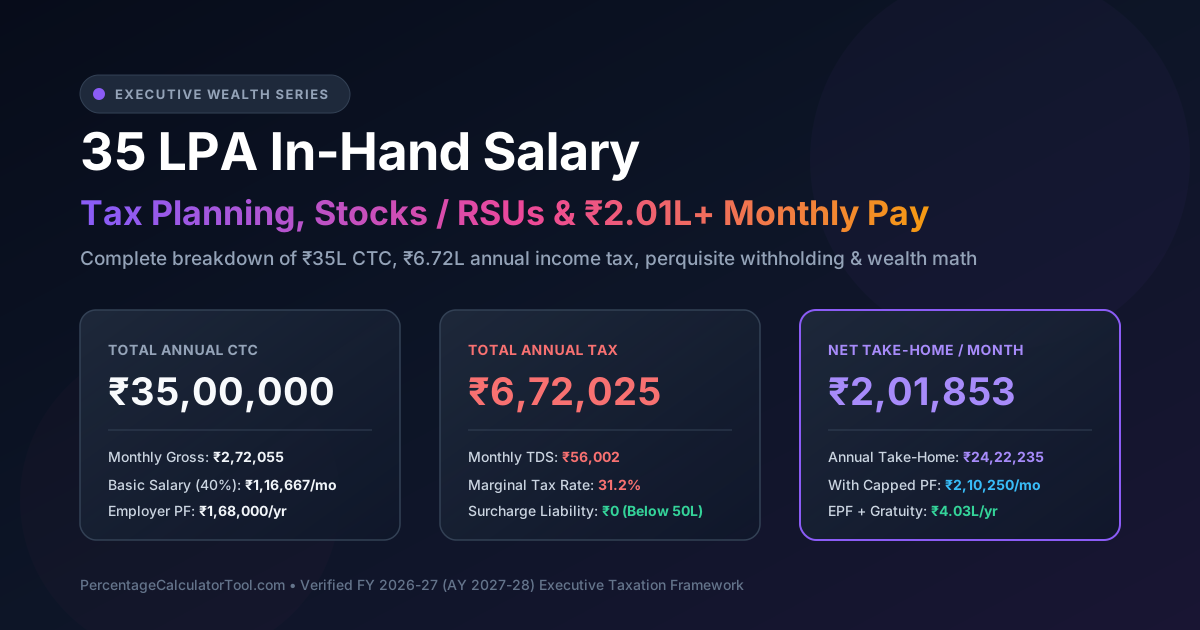
Achieving a compensation package of ₹35,00,000 (35 LPA) is a defining financial landmark in India. At nearly three lakhs per month in gross corporate budget (₹2,91,667), a 35 LPA package is the point where salaried professionals decisively shatter the ₹2 Lakh per month net in-hand bank credit barrier.
Yet with higher compensation comes profound structural complexity. At 35 LPA, salary packages rarely consist of plain monthly paychecks alone. Corporate remuneration packages for engineering managers, technology architects, enterprise sales directors, and data science leads typically combine four elements: base salary, performance incentives, retiral trusts, and multi-year equity grants in the form of Restricted Stock Units (RSUs) or Employee Stock Options (ESOPs).
Furthermore, as your earnings surge toward the critical ₹50 Lakh threshold, strategic tax awareness becomes indispensable. While earners below ₹50 Lakhs pay 0% income tax surcharge, reckless handling of stock vesting, one-time bonuses, or consulting retainers can accidentally push your taxable income over ₹50 Lakhs—triggering a 10% surcharge on your entire tax liability.
In this comprehensive guide, we dissect the exact payroll math of a ₹35 LPA salary for Financial Year 2026-27 (Assessment Year 2027-28). You will understand your exact take-home pay, trace how RSUs are taxed at both vesting and liquidation, review Schedule FA mandatory disclosures for foreign equities, and discover proven strategies to optimize cash flow.
Table of Contents
- 1. Component Breakdown of a 35 LPA CTC Package
- 2. The 35 LPA Monthly Salary Waterfall: Crossing ₹2 Lakhs
- 3. Income Tax Math under FY 2026-27 Slabs
- 4. RSUs and Stock Grants: The Dual-Stage Taxation Framework
- 5. Foreign Stock Compliance: Schedule FA & The Black Money Act
- 6. Surcharge Planning: Managing the ₹50 Lakh Danger Zone
- 7. Frequently Asked Questions (FAQ)
1. Component Breakdown of a 35 LPA CTC Package
A ₹35 LPA package translates to a corporate monthly commitment of ₹2,91,667. In tier-1 product technology companies, multinational consulting firms, and Fortune 500 GCCs (Global Capability Centers), this is typically distributed into fixed monthly allowances, retiral contributions, and statutory provisions:
| Salary Component | Standard Ratio / Basis | Annual Value (₹) | Monthly Value (₹) |
|---|---|---|---|
| Basic Salary | 40% of CTC | ₹14,00,000 | ₹1,16,667 |
| House Rent Allowance (HRA) | 50% of Basic (Metro) | ₹7,00,000 | ₹58,333 |
| Special / Executive Allowance | Balancing Cash Component | ₹11,64,660 | ₹97,055 |
| Employer EPF Contribution | 12% of Basic (Uncapped) | ₹1,68,000 | ₹14,000 |
| Statutory Gratuity Accrual | 4.81% of Basic | ₹67,340 | ₹5,612 |
| Total Cost to Company (CTC) | 100% Fixed Base | ₹35,00,000 | ₹2,91,667 |
2. The 35 LPA Monthly Salary Waterfall: Crossing ₹2 Lakhs
When converting ₹2,91,667 of monthly CTC into actual net take-home, we deduct corporate retirals first to arrive at Monthly Gross Salary (₹2,72,055), followed by statutory payroll withholdings for income tax, provident fund, and professional tax.
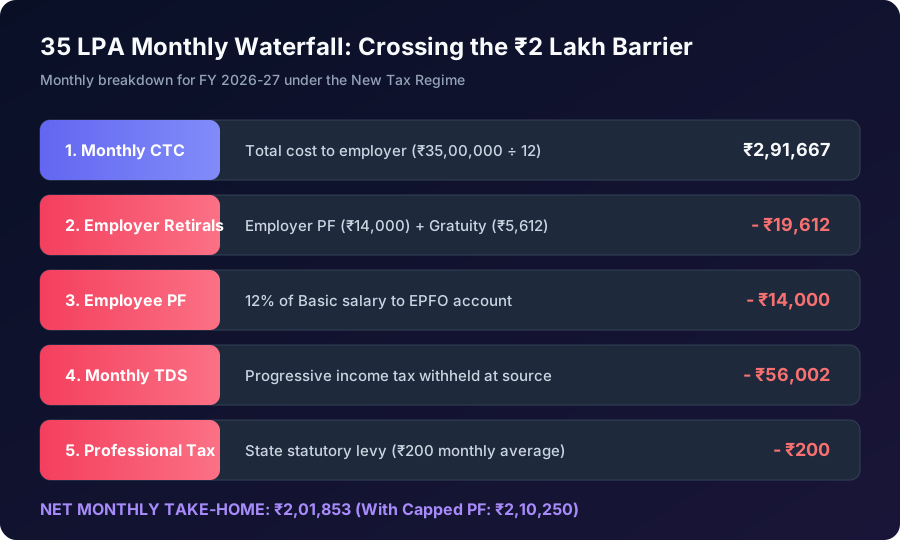
| Deduction Step | Financial Head | Monthly Cash (₹) | Annual Cash (₹) |
|---|---|---|---|
| 1 | Monthly Gross Salary (Earnings) | ₹2,72,055 | ₹32,64,660 |
| 2 | Employee EPF (12% of Basic) | - ₹14,000 | - ₹1,68,000 |
| 3 | Monthly Income Tax TDS (New Regime) | - ₹56,002 | - ₹6,72,025 |
| 4 | State Professional Tax (PT) | - ₹200 | - ₹2,400 |
| ✔ | Net Take-Home Bank Deposit | ₹2,01,853 | ₹24,22,235 |
With an uncapped EPF contribution, you receive ₹2,01,853 every month in liquid take-home cash, while quietly building ₹4,03,340 annually in guaranteed retiral reserves (₹1,68,000 employee PF + ₹1,68,000 employer PF + ₹67,340 gratuity). If your employer caps EPF at ₹1,800/month, your monthly take-home expands further to ₹2,10,250.
3. Income Tax Math under FY 2026-27 Slabs
Under the Revised New Tax Regime (Section 115BAC), standard deduction is ₹75,000. Deducting the standard deduction and ₹2,400 professional tax from your gross salary of ₹32,64,660 gives a Net Taxable Income of ₹31,87,260.
| Tax Slab (New Regime FY 26-27) | Rate | Taxable Chunk (₹) | Tax Amount (₹) |
|---|---|---|---|
| ₹0 to ₹3,00,000 | 0% | ₹3,00,000 | ₹0 |
| ₹3,00,001 to ₹7,00,000 | 5% | ₹4,00,000 | ₹20,000 |
| ₹7,00,001 to ₹10,00,000 | 10% | ₹3,00,000 | ₹30,000 |
| ₹10,00,001 to ₹12,00,000 | 15% | ₹2,00,000 | ₹30,000 |
| ₹12,00,001 to ₹15,00,000 | 20% | ₹3,00,000 | ₹60,000 |
| Above ₹15,00,000 (up to ₹31,87,260) | 30% | ₹16,87,260 | ₹5,06,178 |
| Base Income Tax | ₹6,46,178 | ||
| Add: Health & Education Cess (4%) | + ₹25,847 | ||
| Total Annual Income Tax Liability | ₹6,72,025 | ||
4. RSUs and Stock Grants: The Dual-Stage Taxation Framework
At the 35 LPA level, many tech and executive compensation plans include annual RSU grants worth $10,000 to $30,000 (₹8 Lakhs to ₹25 Lakhs). A widespread error among tech professionals is misunderstanding how Indian tax law treats employee equity. RSUs are taxed at two distinct junctures:
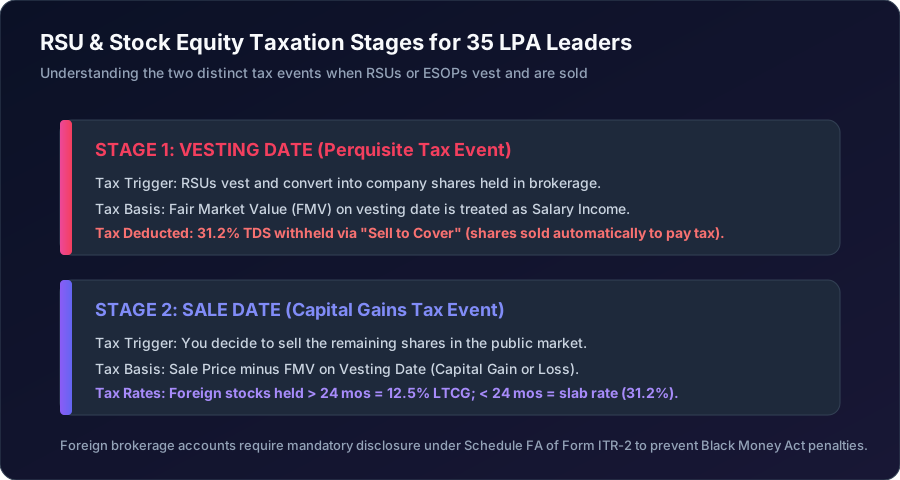
Stage 1: Vesting Date (Salary Perquisite Tax)
On the day your RSUs vest, the Indian Income Tax Department treats the Fair Market Value (FMV) of those shares as direct salary earnings (perquisite under Section 17(2)). Even though you haven’t sold the shares, tax is owed immediately at your marginal rate of 31.2%.
How it’s collected: Most brokerage platforms (such as Morgan Stanley, E*TRADE, or Charles Schwab) execute an automated "Sell to Cover" transaction—selling roughly 31% to 35% of your newly vested shares on the spot to remit withholding tax to your employer’s payroll desk.
Stage 2: Sale Date (Capital Gains Tax)
When you later sell the remaining shares, the cost of acquisition is fixed as the FMV on the vesting date. The difference between your sale price and that FMV is taxed as Capital Gains:
- Short-Term Capital Gains (STCG): If held for 24 months or less, gains are added to total income and taxed at your marginal slab rate (31.2%).
- Long-Term Capital Gains (LTCG): If held for more than 24 months, gains are taxed at 12.5% without indexation under the latest Finance Act rules.
5. Foreign Stock Compliance: Schedule FA & The Black Money Act
If you work for an Indian subsidiary of a foreign multinational (such as Google, Microsoft, Adobe, Uber, or Amazon) and hold US shares or brokerage cash balances, you are legally required to file Schedule FA (Foreign Assets) in your income tax return (Form ITR-2 or ITR-3).
Crucial Warning: Failure to Report Foreign Shares
Under the Black Money (Undisclosed Foreign Income and Assets) and Imposition of Tax Act, 2015, failing to declare foreign shares or foreign brokerage accounts in Schedule FA carries a flat penalty of ₹10,00,000 (10 Lakhs) per assessment year, even if full TDS was already deducted by your employer on the vesting date! Always disclose peak investment value, closing balance, and dividend proceeds accurately.
6. Surcharge Planning: Managing the ₹50 Lakh Danger Zone
While a base salary of 35 LPA has zero surcharge liability, high-performing executives must monitor total annual income closely:
- Base Gross Salary: ₹32.65 Lakhs.
- Annual Target Bonus (15%): +₹5.25 Lakhs.
- Annual RSU Vesting ($15,000 FMV): +₹12.75 Lakhs.
- Total Taxable Income: ₹50,65,000.
In this scenario, earning an extra ₹65,000 pushes your total income over ₹50,00,000. Under Indian tax law, crossing ₹50 Lakhs activates a 10% surcharge on your entire calculated base tax. Fortunately, Section 115BAC includes Marginal Relief, which limits the additional tax plus surcharge to not exceed the income earned above ₹50 Lakhs. Knowing these dynamics allows you to time share vesting or leverage Section 80CCD(2) Corporate NPS to stay comfortably under the threshold.
Simulate Your Executive Compensation
Calculate your exact take-home pay, model variable bonus impacts, and verify income tax with our free tools:
7. Frequently Asked Questions (FAQ)
What is the monthly in-hand salary for a 35 LPA CTC in India? ▼
Under the New Tax Regime (FY 2026-27), a ₹35 LPA CTC yields a monthly take-home pay of approximately ₹2,01,850 with standard uncapped EPF. If EPF is capped at ₹1,800/month, take-home rises to around ₹2,10,250 per month.
How much annual income tax is deducted on a 35 Lakh salary? ▼
Under the New Tax Regime, total annual income tax liability is approximately ₹6,72,000 including 4% Health & Education Cess. This represents an effective tax rate of roughly 19.2% on total CTC.
How does Sell to Cover work for US RSUs in India? ▼
Sell to Cover is an automated payroll feature where your brokerage immediately sells approximately 31.2% of your vesting shares to cover mandatory Indian TDS withholding. The proceeds are remitted to your employer, who deposits the tax with the Indian government under your PAN.
Can a 35 LPA earner save tax using Section 80CCD(2) Corporate NPS? ▼
Yes. By having your employer contribute 10% of your Basic pay (₹1,40,000/year) into Corporate NPS, you reduce your taxable income in the 30% slab, saving ₹43,680 in direct annual income tax.
Which ITR form should I file if I hold RSUs? ▼
If you hold foreign shares (such as US-listed stock from an MNC employer), you cannot file Form ITR-1 (Sahaj). You must file Form ITR-2 to report your foreign assets in Schedule FA and disclose capital gains under Schedule CG.
Written by the PercentageCalculatorTool Team
Our team of chartered accountants and compensation specialists model direct taxation, equity grants, and wealth strategies for tech leaders across India.